You'll be re-directed to the Institutional Investor site.



This material must be accompanied or preceded by the Fund’s prospectus.
30-Day SEC Yields (net expenses as of 6/30/25)
Dodge & Cox Stock Fund — Class I Shares: 1.43%; Dodge & Cox International Stock Fund — Class I Shares: 2.02%; Dodge & Cox Global Stock Fund — Class I Shares: 1.48%; Dodge & Cox Emerging Markets Stock Fund Shares: 2.01%. SEC Yield is an annualization of the Fund's net investment income for the trailing 30-day period. Dividends paid by the Fund may be higher or lower than implied by the SEC Yield.
Read Transcript
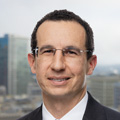
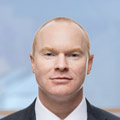
Download PDFDoug: Hello everyone, and welcome to the Dodge & Cox 2025 Mid-Year Equity Review. I’m Doug Silverman, a Client Portfolio Manager. It’s my pleasure to introduce Ben Garosi. Ben is a Global Industry Analyst, the Head of our Industrials and Energy Sector Committee, and a member of our U.S. Equity and Balanced Fund Investment Committees. Thanks for joining, Ben.
Ben: Hi, Doug. Happy to be here.
Doug: Today, we’ll provide a brief overview of equity markets, our equity Funds’ performance, then discuss each of our Funds in a bit more detail—focusing on attribution, portfolio positioning, and where we’ve been finding opportunities. Before we cover those topics, Ben, many of our clients would like to better understand our approach to navigating periods of heightened market volatility like we experienced in April—given our long-term, fundamental, bottom-up, and price-disciplined orientation.
Ben: Yeah, this year—but particularly in Q2—there was a lot of volatility in equity markets. We maintain our same investment approach, so we’re focused on company-by-company fundamental analysis. We rely on our analysts and [their] deep knowledge of their industries, and we keep an eye on the long term. Our Investment Committees look at risk at the company level but also across the whole portfolio, and we’re always considering valuation. The goal continues to be generating excellent risk-adjusted returns over a multi-year period. While we continue to adjust the portfolio and react during periods of volatility—for example, we found a lot of opportunities during the selloff in Q2 (second quarter)—we keep our focus on the long term.
Doug: Thanks, Ben, and perhaps that’s a good segue to discussing how equity markets have performed so far this year.
Ben: Markets were really jolted by the April tariff announcements and concerns about economic growth. They rebounded quickly as tariffs were paused and there was progress in trade negotiations. Despite the challenges, the S&P 500 [Index] hit a record high, and U.S. equity valuations remain elevated. In a reversal from the first quarter, Information Technology was the strongest-performing sector in Q2. Inflation remains elevated but fairly contained so far this year. Observers generally expect tariffs to add some upward pressure to prices and may weigh on growth later this year, but the magnitude and timing are unclear. Also, interestingly, we saw investor enthusiasm shift notably away from the United States and toward international equities. The weakening U.S. dollar provided a tailwind for investors in international stocks. The U.S. market still trades at a significant premium, with the valuation around 23 times forward earnings versus just 14 times forward earnings internationally.1
Doug: With that backdrop, we should turn to performance. For the purposes of this conversation, we’ll focus on the year-to-date time period, in which the Stock, International Stock, Global Stock, and Emerging Markets Stock Funds all outperformed their respective benchmarks.2 That said, an important point I would highlight is that we are long-term investors. Therefore, we would emphasize our long-term performance track record and that we do not chase short-term performance targets. So let’s get into the Stock Fund and highlight a few key contributors and detractors to relative performance. Also, I would direct our listeners to the investment commentary documents on our website for additional attribution commentary.
Ben: [In the Stock Fund,] the top two areas of strength were Consumer Discretionary as well as Industrials. One individual contributor to note was CVS, which is one of our top ten holdings and our largest position in Health Care—our biggest sector weight.3 CVS reported a better-than-expected outlook for this year (2025) on improving margins in its managed care business, which is called Aetna. In addition, some market concerns around Pharmacy Benefit Manager (PBM) regulation have lessened so far this year. Managed care companies have done well in 2025 after a period of underperformance. We remain optimistic about margin recovery and their Medicare Advantage franchises, and we believe regulation will be manageable. CVS has a strong franchise and it’s well positioned to navigate regulatory risks and grow profits. The regulatory environment is always uncertain, but there’s clearly a desire to reduce the rate of growth in U.S. Health Care spending. Managed care companies and PBMs are likely to remain important players in the Health Care system in the United States for the foreseeable future.
Doug: Another key contributor was GE Aerospace, which is a spinoff from GE (General Electric). Can you talk a little bit about that position?
Ben: Yeah, we’ve followed GE for many years. We know the company really well. We started a position in 2022. The new CEO there, Larry Culp, is someone we’d known from our prior investment in Danaher, where he was the CEO for many years. GE was going through a restructuring process and splitting into three public companies. We looked at the business on a sum-of-the-parts basis and viewed it as trading at a clear discount to its fair value. After the split, which finalized in 2024, we’ve continued to own two of the three companies. The performance at GE Aerospace has been excellent—it’s up over 50% this year. We continue to see the recovery in air travel post COVID-19; we expect that to continue. We’ve seen the business drive margin improvement, which we also expect will continue to go to new highs. The CEO that we like, Larry Culp, recently had his contract extended for an additional three years.
Doug: Thanks, Ben. Materials and Energy were two of the largest detractors from a sector perspective. Can you discuss Occidental Petroleum (OXY)—what drove recent performance and what’s our thesis?
Ben: OXY, like all Energy companies, generates earnings that are ultimately linked to the oil price. Oil prices are down year to date, and so OXY—like most Energy companies—has underperformed. That said, we do like the assets. It combined its U.S. business with Anadarko’s in 2019, which gave it a strong position in the Permian Basin—the key U.S.-producing region. We view them as really good operators, and we think they’re developing a pretty interesting carbon capture business that should create long-term value for shareholders.
Doug: Given our value orientation, many of our clients use the Russell 1000 Value [Index] as the Fund’s benchmark. So versus that benchmark, key contributors and detractors are similar to those of the S&P 500, with a few differences like a key detractor was the Fund’s position in Alphabet.
As we turn to portfolio positioning, it’s important to note that when we discuss sector or regional exposures, these are an outcome of our bottom-up process. In other words, we build our portfolios company by company. Also, we’re an active manager. Our portfolios have high active share, meaning they do not look like their respective benchmarks. We are aware of the Fund’s positioning, obviously, relative to the benchmark, but we don’t have any targets or limits with respect to how we position the Fund relative to the benchmark. Keeping that in mind, Ben, you mentioned Health Care being the Fund’s largest overweight and CVS Health as one of the Fund’s largest positions. How is the Fund positioned today relative to both the S&P 500 and the Russell 1000 Value?
Ben: We view the Fund as being well positioned for a variety of economic outcomes, including a potentially more adverse environment. We have higher weightings in companies that are less cyclical or trade at large valuation discounts. The biggest sector exposures are in Health Care, Financials, Industrials, and Communication Services. Then, given higher valuations, our largest underweight is in Information Technology.
Doug: A year ago, the Fund’s largest position was in Financials. This highlights how our long-term approach and low portfolio turnover do not mean the portfolio is stagnant. Rather, we’re making incremental portfolio changes that can lead to meaningful shifts over time.
Ben: That is true. For example, over the last year, we’ve made significant adds in Health Care, Materials, Industrials, and Real Estate—funding that largely with trims across Financials, Communication Services, and Information Technology after strong performance from our holdings in those sectors. Even with that underweight in Information Technology, we added a new name there—TSMC (Taiwan Semiconductor Manufacturing Company). It’s the largest semiconductor foundry company in the world. TSMC benefits from its huge scale, wide barriers to entry, and technology leadership. We think it has real pricing power and will be a key beneficiary of continued growth in semiconductors and AI spending. Also, it trades at a really reasonable valuation.
Doug: I’m glad you mentioned TSMC, which is a non-U.S. company. Another question we often receive from clients is about how the Investment Committee thinks about investing in non-U.S. companies in a U.S. portfolio.
Ben: International names represent about 10% of the U.S. [Stock] Fund. We typically invest in international companies if we’re finding a lack of opportunities—either weaker franchise quality or sometimes just high valuations—in a specific sector in the United States. We’re looking for a strong connection to the U.S. market. We’re not trying to invest based on our view of a foreign currency or foreign GDP growth, but a company with a lot of U.S. exposure and trading at a discount. Some examples include Ashtead—it’s an Industrials company domiciled in the United Kingdom but with the vast majority of earnings in the United States—Sanofi, or GSK, which are pharmaceuticals companies for which the United States is their largest market.
Doug: To close out our discussion on the Stock Fund, a quick comment on outlook. I would say we are cautious in our expectations for future S&P 500 returns, given the extent to which U.S. equity valuations are elevated today. However, we believe the Stock Fund is well positioned for a variety of economic environments. The Fund trades at an attractive valuation of 14 times forward earnings—a significant discount to the S&P 500 and the Russell 1000 Value—and is diversified across a broad range of investment themes.
Transitioning to the International Stock Fund, you had mentioned in the market overview that international markets have rallied so far this year, with all sectors advancing and international value outperforming growth.4 The International Stock Fund outperformed the MSCI ACWI ex USA [Index] year to date [as of June 30]. Can you just discuss what led to the Fund’s outperformance?
Ben: Our holdings in Financials were the top contributor to relative results—notably our positions in Banco Santander, BNP Paribas, Itaú [Unibanco], and Barclays. Some of the individual detractors included IFF (International Flavors & Fragrances), Glencore, Sanofi, Diageo, and Stellantis.
Doug: Stellantis is a name many of our clients ask us about. Can you provide a quick overview of our thesis?
Ben: Sure. Stellantis is a leading auto manufacturer. It was created through the merger of Peugeot and Fiat in 2021. The thesis here has a few parts. First is the franchise quality—Stellantis owns one of the key U.S. pickup truck brands, Ram. It also owns Jeep. In Europe, it has Peugeot, which is the market leader in France, and Fiat, which is the market leader in Italy. So, we think the franchise is balanced. It’s not overly reliant on any one country or any one brand. It has real staying power.
The second part is governance, where there’s family involvement with both of the two legacy companies. The chairman, John Elkann, owns over 15% through his family holding company, and he’s highly aligned with us as outside shareholders to see the share price improve.
Finally, valuation is remarkably low at Stellantis. Of course, no investment comes without risks, and the key ones here include rising competition from Chinese OEMs (Original Equipment Manufacturers). Stellantis’ business in China itself is actually quite small, but we’re actively tracking competition from Chinese automakers across Europe as well as emerging markets—for example, in South America.
There are also currently uncertainties around tariffs. It’s too soon to know how those will play out, but we think Stellantis is positioned fairly well there, at least versus many of its peers. Our team has done a lot of work on tariffs more broadly, but also a deeper dive into Stellantis, and has gotten more comfort there.
Finally, Stellantis lost a lot of market share in the United States last year as it was trying to maintain higher margins through higher vehicle prices. So, it’s in a bit of a turnaround mode and has a new management team. It is not an easy path, but we believe the risks are well incorporated in the valuation and provide long-term investors like us with an attractive opportunity.
Doug: Thanks, Ben. Stellantis perhaps is an example of our price-disciplined and often contrarian approach. Another area of focus for clients in the recent past has been the Fund’s overweight to Financials, which peaked in late 2020. It’s nice to see that four out of the five largest contributors to the Fund’s relative performance were in Financials—perhaps a testament to our patience and persistence.
For portfolio positioning, Financials continues to be the Fund’s largest sector exposure, but we’re now slightly underweight the MSCI ACWI ex USA. Our largest overweights are in Health Care and Materials, while our largest underweights are in Information Technology and Industrials. Ben, can you discuss some of the changes we’ve made within the portfolio this year?
Ben: Yeah, I’m happy to. Financials have performed quite well year to date [as of June 30]. We’ve leaned into that strength and trimmed a variety of European banks, such as Banco Santander and Barclays.
To provide a bit of context regarding the performance of European banks that might be interesting and somewhat surprising to clients; they’ve outperformed even the “Magnificent Seven” on a one-, three-, and five-year basis.
We redeployed some of those proceeds into the Fund’s positions in Asian life insurers, including AIA [Group] and Prudential [PLC]. Those are the two largest life insurers in the region, and their valuations embed lower growth expectations than we’ve been forecasting.
Doug: Let’s discuss a new position we added to the portfolio this year—Walmex (Walmart de México)—which I would also point out is held in our Global and Emerging Markets Stock Funds.
Ben: Walmex is Mexico’s number one retailer, and it’s majority owned by Walmart. It has a dominant market position, an excellent management team with a long history of great execution, which has driven both market share gains and margin improvement over time.
We started a position in Walmex early this year after we saw an increase in competition as well as really elevated economic concerns in Mexico, which led to a big valuation discount. It gave us a rare opportunity to invest in an excellent business at a discounted price.
We think Walmex has a long runway for growth, as one third of the Mexican retail market is still done through informal channels. Given the Walmart relationship, Walmex is able to benefit from Walmart’s IT (Information Technology), its supply chain, [and] its talent pool. E-commerce would be another opportunity for growth—e-commerce penetration in Mexico is quite low. It’s among the lowest of major markets. Walmex has brought in a new CEO who comes with significant e-commerce-specific experience from his prior roles.
There are a few headwinds in Mexico—wage inflation and supplier regulations being two. Some of Walmex’s competitors are less impacted since they use less labor or have different supplier models. We’ve seen competition is growing, but it’s off a very low base, and so we think that risk is manageable. Walmex could have hiccups [but] it’s the dominant retailer with significant scale and operating advantages and has a demonstrated ability to weather storms in the past.
Doug: Thanks, Ben. From an outlook perspective, international equities continue to remain attractively valued versus the United States despite their recent outperformance. While multiples have expanded year to date, the valuation gap between international and U.S. remains wide.
We believe international equities present a great long-term opportunity due to their attractive valuations, diversification benefits, distinct market exposures, and structural reforms aimed at boosting competitiveness. For the International Stock Fund, we found opportunities across a variety of attractively-valued sectors and companies, and the Fund trades at 12 times forward earnings, compared to 14 times for the ACWI ex USA, reflecting our value-oriented approach.
Now turning to our Global Stock Fund. The Global Stock Fund also outperformed the MSCI ACWI [Index] year to date. Can you discuss some of the key contributors and detractors to the Fund’s relative performance?
Ben: Key contributors to our results included Financials holdings like Banco Santander, BNP Paribas, XP, and Prudential. CVS is another position that performed well. Some of the detractors from relative results were Materials and Industrials holdings—notably IFF and FedEx—and unique positions in Avantor, Fiserv, and OXY.
Doug: Within Materials, Holcim stands out as performing well compared to other holdings in the sector. Can you discuss recent performance and our thesis?
Ben: Yeah, I’m happy to. Holcim is a leader in cement. It has seen strong operating performance and margin improvement, largely through pricing power. This year it created value by splitting into two companies. Its U.S. assets, which are now called Amrize, were spun off to shareholders this year, and the non-U.S. assets remain as Holcim. We like that Holcim has an excellent management team that clearly cares about the share price, shareholders, and improving its returns on capital. We also have newfound optimism for potential growth in Europe. We’ve seen examples, like the announced stimulus in Germany, that should help boost volume growth going forward.
Doug: Getting into portfolio positioning, Financials remains the Fund’s largest sector position, but the overweight compared to the MSCI ACWI has narrowed considerably. Other notable overweights are in Health Care and Materials. The Fund’s main underweight is in Information Technology. From a regional perspective, we remain underweight the United States. As we mentioned earlier, the U.S. markets still trade at a significant premium to international counterparts. Can you discuss some of the changes we’ve made in the portfolio?
Ben: After strong performance in Financials, the Fund continued to reduce its positions in that sector. Year to date [as of June 30], Financials was the largest area of trims, including Banco Santander, BNP Paribas, Barclays, and Charles Schwab. We made a complete sale of BNY Mellon. Year to date, the largest adds were to defensives—or strong franchises—at attractive valuations. For example, we added in Consumer Staples, Information Technology, and Health Care. We also increased the Fund’s EM (emerging markets) exposures by adding to companies like Coupang and TSMC and initiating a new position in Walmex.
Doug: Looking forward, the Global Stock Fund remains inexpensive and diversified across multiple investment themes. The Fund trades at 13 times forward earnings—a meaningful discount to the ACWI, which trades at 19 times.
Now let’s turn our attention to the Emerging Markets Stock Fund, which recently had its four-year anniversary. We’re excited to say that. The Fund’s relative performance has been strong over the one-year, three-year, and since-inception time periods—and the more recent year-to-date time period—versus the MSCI Emerging Markets Index.
Ben: The first half of the year underscored the breadth of the emerging market asset class. A variety of regions performed well. Results in Latin America have been particularly noteworthy, as equity markets rebounded following a slump in 2024. Last year, we added to Brazilian Financials, particularly XP. These positions contributed strongly to the Fund’s performance in 2025.
Key contributors to outperformance overall included Financials—I mentioned XP also Itaú Unibanco and Prudential—stock selection and underweight in India, and Consumer Discretionary holdings, particularly Alibaba and Coupang.
Some detractors from results included the Fund’s China and Taiwan currency hedges, Energy holdings like NESR (National Energy Service Reunited), and Materials holdings like Glencore. Glencore and NESR were some detractors due to commodity price declines— oil for NESR and coal for Glencore. We added to both companies in the quarter. Adding to our long-term positions in times of short-term volatility is a hallmark of our strategy.
Doug: Thanks, Ben. You mentioned adding to positions in NESR and Glencore and an underweight to India. Can you discuss some of the other overweights or underweights of the Fund and other changes to portfolio positioning we’ve made in 2025?
Ben: Yes, we are overweight Brazil. We’re underweight India and Taiwan, though equal weight Greater China.5 In China, we’ve seen equities remain volatile—as there’s AI (artificial intelligence) excitement, but on the other hand, ongoing tariff negotiations and macro uncertainty.
We’ve adjusted our portfolio in response to changes in valuation— trimming Alibaba and Prosus—and we started a new, larger position in DiDi Global, the Chinese ride-sharing leader. With China overall, we push back against the notion that Greater China is uninvestable, though we acknowledge that caution is warranted.
A key question when we evaluate investing in a Chinese company is: what expectations are priced into the current valuation? China and the United States have shown a willingness to engage in dialogue to reduce tariffs, but the path to a resolution does remain uncertain. That said, over the medium term, China remains a key contributor to global economic growth with a large and growing middle class.
Our investment strategy incorporates both internal and external perspectives and geopolitical considerations. We believe our China holdings remain attractive long-term investments within our diversified portfolios.
Doug: Thank you, Ben. We’ve covered a lot of ground in a short period of time. What closing thoughts would you like to share with our audience?
Ben: I’d thank them for listening today, and I’d leave the audience with a few key takeaways:
One, we continue to monitor the impact that tariffs and other economic developments have on our companies through rigorous bottom-up research. We’re consistent in our investment approach— strict price discipline, a long-term investment horizon, and team-based decision-making.
We see that periods of volatility often lead to new investment opportunities, so we remain nimble and adjust our portfolios based on the changing opportunity set.
Finally, our Funds are diversified by sector, by geography, and investment thesis, and are well positioned for a variety of economic environments. And of course, they do trade at a discount to their benchmarks.
As always, we appreciate your investment and your interest in Dodge & Cox.
Doug: Thank you, Ben, for sharing your insights with us today. One point I want to reiterate for our clients is the consistency of our investment approach and our investment team—and that we leverage our team’s collective knowledge and experience across a focused set of products. This is a hallmark of Dodge & Cox that we believe makes us better investors for our clients and is a critical foundation upon which we rely during periods of uncertainty.
We want to thank our listeners for your interest in our discussion and wish you a wonderful rest of the year. We’re grateful for your confidence that you’ve placed in Dodge & Cox and look forward to speaking with you soon. Thank you.
Contributors
Dodge & Cox Stock Fund — Class I Gross Expense Ratio as of June 30, 2025: 0.51%
Dodge & Cox Stock Fund — Class I SEC Standardized Average Annual Total Returns as of June 30, 2025: 1 Year 13.46%, 5 Years 17.37%, 10 Years 11.50%. Fund and Index standardized performance is available on our website.
Stock Fund’s Ten Largest Positions (as of June 30, 2025): The Charles Schwab Corp. (4.5% of the Fund), RTX Corp. (3.5%), Johnson Controls International PLC (3.0%), Fiserv, Inc. (3.0%), CVS Health Corp. (2.8%), MetLife, Inc. (2.7%), Charter Communications, Inc. (2.6%), Wells Fargo & Co. (2.5%), Alphabet, Inc. (2.4%), and Sanofi SA (2.3%).
Dodge & Cox International Stock Fund — Class I Gross Expense Ratio as of June 30, 2025: 0.62%
Dodge & Cox International Stock Fund — Class I SEC Standardized Average Annual Total Returns as of June 30, 2025: 1 Year 23.15%, 5 Years 13.94%, 10 Years 6.09%. Fund and Index standardized performance is available on our website.
International Stock Fund’s Ten Largest Positions (as of June 30, 2025): BNP Paribas SA (3.3% of the Fund), Banco Santander SA (3.3%), Johnson Controls International PLC (3.2%), Novartis AG (2.7%), Taiwan Semiconductor Manufacturing Co., Ltd. (2.6%), GSK PLC (2.6%), Barclays PLC (2.5%), Sanofi SA (2.5%), Itau Unibanco Holding SA (2.4%), and UBS Group AG (2.3%).
Dodge & Cox Global Stock Fund — Class I Gross Expense Ratio as of June 30, 2025: 0.62%
Dodge & Cox Global Stock Fund — Class I SEC Standardized Average Annual Total Returns as of June 30, 2025: 1 Year 14.53%, 5 Years 16.07%, 10 Years 9.25%. Fund and Index standardized performance is available on our website.
Global Stock Fund’s Ten Largest Positions (as of June 30, 2025): The Charles Schwab Corp. (2.8%), GSK PLC (2.7%), RTX Corp. (2.5%), Taiwan Semiconductor Manufacturing Co., Ltd. (2.4%), CVS Health Corp. (2.2%), Charter Communications, Inc. (2.2%), Alphabet, Inc. (2.2%), HDFC Bank, Ltd. (2.1%), Comcast Corp. (1.9%), and Coupang, Inc. (1.8%).
Dodge & Cox Emerging Markets Stock Fund — Gross Expense Ratio as of June 30, 2025: 0.95%
Dodge & Cox Emerging Markets Stock Fund SEC Standardized Average Annual Total Returns as of June 30, 2025: 1 Year 16.98%, 3 Year 12.52%, Since Inception (May 2021) 2.03%. Fund and Index standardized performance is available on our website.
Emerging Markets Stock Fund’s Ten Largest Positions (as of June 30, 2025): Taiwan Semiconductor Manufacturing Co., Ltd. (7.3% of the Fund), Alibaba Group Holding, Ltd. (3.6%), Itau Unibanco Holding SA (2.8%), HDFC Bank, Ltd. (2.7%), Tencent Holdings, Ltd. (2.5%), Coupang, Inc. (2.3%), Credicorp, Ltd. (2.2%), Ambev SA (2.0%), National Energy Services Reunited Corp. (1.9%), and XP, Inc. (1.9%).
Endnotes
1. Unless otherwise specified, all weightings and characteristics are as of June 30, 2025.
2. Fund performance results are for the Stock Fund, International Stock Fund, and Global Stock Fund Class I shares.
3. The use of specific examples does not imply that they are more or less attractive investments than the Fund’s other holdings.
4. In the first half of 2025, the MSCI ACWI ex USA Value and MSCI ACWI ex USA Growth had total returns of 19.90% and 15.89%, respectively.
5. Greater China includes China, Hong Kong, and Macao.
Disclosures
Statements in this presentation represent the opinions of the speakers expressed at the time the presentation was recorded, and may change based on market and other conditions without notice. The statements are not intended to forecast or guarantee future events or results for any product or service, or serve as investment advice.
The information provided is not a complete analysis of every material fact concerning any market, industry or investment. Data has been obtained from sources considered reliable, but Dodge & Cox makes no representations as to the completeness or accuracy of such information. The information provided is historical and does not predict future results or profitability. This is not a recommendation to buy, sell, or hold any security and is not indicative of Dodge & Cox’s current or future trading activity. Any securities identified are subject to change without notice and do not represent a Fund’s entire holdings. This information is the confidential and proprietary product of Dodge & Cox. Any unauthorized use, reproduction, or disclosure is strictly prohibited. These materials are provided solely for use in this presentation and are intended for informational and discussion purposes only. Dodge & Cox does not guarantee the future performance of any account (including Dodge & Cox Funds) or any specific level of performance, the success of any investment decision or strategy that Dodge & Cox may use, or the success of Dodge & Cox’s overall management of an account. Investment decisions made for a client’s account by Dodge & Cox are subject to various market, currency, economic, political, and business risks (foreign investing, especially in developing countries, has special risks such as currency and market volatility and political and social instability), and those investment decisions will not always be profitable.
The Fund invests in securities and other instruments whose market values fluctuate within a wide range so your investment may be worth more or less than its original cost. International investing involves more risk than investing in the U.S. alone, including currency risk and a greater risk of political and/or economic instability; these risks are heightened in emerging markets. The Fund may use derivatives to create or hedge investment exposure, which may involve additional and/or greater risks than investing in securities, including more liquidity risk and the risk of a counterparty default. Some derivatives create leverage.
Returns represent past performance and do not guarantee future results. Investment return and share price will fluctuate with market conditions, and investors may have a gain or loss when shares are sold. Fund performance changes over time and currently may be significantly lower than stated above. Performance is updated and published monthly.
Before investing in any Dodge & Cox Fund, you should carefully consider the Fund’s investment objectives, risks, and charges and expenses. To obtain a Fund’s prospectus and summary prospectus, which contain this and other important information, or for current month-end performance figures, visit dodgeandcox.com or call 800-621-3979. Please read the prospectus and summary prospectus carefully before investing.
Dodge & Cox Funds are distributed by Foreside Fund Services, LLC, which is not affiliated with Dodge & Cox.
See dodgeandcox.com/disclosures for a full list of financial terms and Index definition.