You'll be re-directed to the Financial Professional site.



This material must be accompanied or preceded by the Fund’s prospectus.
Read Transcript
Download PDFRyan: Welcome to the 2025 Dodge & Cox Global Fixed Income audiocast. I’m Ryan Utsumi, a Client Portfolio Manager, and I’m joined by Matt Schefer, a Credit Analyst and Global Fixed Income Investment Committee member. Thanks for joining, Matt.
Matt: It’s great to be here.
Ryan: Over the next 10 to 15 minutes, we’ll talk about the global fixed income backdrop, how the Fund navigated 2025, and what we’re focused on headed into 2026. Let’s jump right in.
2025 was a great year for the Fund. Returns were roughly 11.5% for the [Dodge & Cox Worldwide Funds] Global Bond Fund’s USD Accumulating Class, and importantly, the three main levers of the strategy—currency, credit, and interest rates—all contributed nicely to returns.1 In addition to boosting performance, the weakening of the U.S. dollar was one of the biggest stories of 2025. As we look ahead, has this move largely played out or is there more room to go?
Matt: Thanks, Ryan. That’s a great place to start. And the short answer is that we expect the [U.S.] dollar to continue to weaken over our three- to five-year investment horizon, although not against every currency. We believe this for a couple of reasons.
For starters, our research indicates that valuation is an important driver of long-term currency movements. In our view, the U.S. dollar looked quite overvalued at the start of 2025 and remains somewhat overvalued even after last year’s 7% sell-off. This argument holds true for the trade-weighted [U.S.] dollar overall but is especially the case when we drill down to certain currency pairs. We see the Japanese yen’s valuation against the dollar, for example, as being at multi-decade lows.
On the fundamental side, I think we’d observe that many of the drivers of [U.S.]-dollar weakness in 2025 are likely to remain in place. For example, [U.S.] interest rate and growth differentials have narrowed versus peers. The U.S. continues to run large fiscal and current account deficits, and U.S. policy uncertainty remains elevated.
While there are certainly some offsetting factors that argue for [U.S.] dollar strength, including things like strong relative productivity growth and the [U.S.] dollar’s safe-haven status, on balance we expect the [U.S.] dollar to weaken in our base case over the next few years, especially against other developed market currencies.
Ryan: So how is this view expressed in our portfolio positioning?
Matt: Well, before giving any examples, I think I should emphasise that we construct our portfolio on a bottom-up basis. Our Investment Committee doesn’t arrive at the portfolio’s non-[U.S.] dollar weight via top-down analysis, but rather it’s a function of the individual investments that our team finds attractive.
Over the course of 2025, we trimmed our non-[U.S.] dollar weighting slightly, bringing it down to the low twenties as a percentage of the Fund, with the largest trims primarily in strong-performing emerging market currencies like the Colombian peso.2 We also found opportunities to add to some of our favourite currency exposures throughout the year, despite this weak dollar backdrop. For example, we increased our position in the Australian dollar, which we believe is undervalued and benefits from solid fundamentals.
Taking a step back, we ended the year with about a dozen currency exposures overall in the Fund. These are the ones where we see the best risk/reward prospects, taking into account both the possibility of spot price appreciation as well as the level of income that we earn.
Ryan: If the base case that you’ve described plays out, it seems like that would be favourable for global fixed income generally and for the Global Bond Fund’s returns. But one of the questions we get from clients is whether an investor needs to believe that [U.S.]- dollar weakness is going to continue to make investing in global fixed income make sense. Are they right? How would you respond to that?
Matt: A weak [U.S.] dollar would certainly be a tailwind for our Fund and something we’re positioned for, but we don’t necessarily need a weak dollar for our strategy to be successful. If you look at our 10-year annualised return [for the USD Accumulating Class], for example—which is in excess of 5% a year—I think that’s a really nice example of this. Even though the trade-weighted [U.S.] dollar appreciated modestly over the past decade, the Fund still produced an attractive absolute and benchmark-relative return thanks to the sizable contributions from our credit and yield curve positioning.
I do think you’ve hit an important point, though, that things don’t always go according to plan. As a Committee, we focus heavily on scenario analysis rather than anchoring on point forecasts, and we aim to put together a portfolio that we think can do well across a range of macro scenarios. We talked before about how our base case is consistent with U.S.-dollar weakness, but we also consider states of the world where the U.S. dollar may strengthen.
When we put together the portfolio, we do spend a lot of time carefully selecting what currencies we purchase, but we also try to be thoughtful around the sizing of exposures as well. Over the past decade, we’ve generally managed the Fund to have less than 25% in non-[U.S.] dollar exposure. We believe that’s large enough to move the needle positively on performance if our views come true, but it’s still generally small enough to not overwhelm the Fund’s credit and duration exposures if we’re wrong on the currency side.
Now, given that credit has been an important component of the Fund over time, maybe we move there next. What are you hearing from clients when it comes to our credit exposure?
Ryan: My colleagues and I continue to field questions about where we’re investing in this environment of modest credit spreads. The answer is generally shorter-duration and higher-quality credits.
Our Credit [sector] weight, which was around 35–36% at year end, is near an all-time low for the Fund. But even with credit market spreads at historically tight levels, we found several opportunities to add during the year.
April’s Liberation Day provided a brief window of spread widening, which the Fund took advantage of by purchasing companies like Japan Tobacco and Molex. We also saw idiosyncratic opportunities later in the year, including a new issue from Verizon. Matt, can you share a bit more about what stood out with that offering?
Matt: So I think Verizon’s a great example of us taking advantage of the Fund’s wide opportunity set via our bottom-up research. This is obviously a company that everyone knows, but it was interesting because they accessed the market in a bit of a non-traditional form. In particular, they came to market in the fourth quarter of last year and issued their first ever hybrid security. So these are 30-year subordinated bonds—callable in about five years—and they’re designed to protect the company’s senior credit ratings. What was also an interesting twist was that these bonds were only issued in euros and sterling, not [U.S.] dollars. We ultimately did decide to purchase these bonds because we thought they offered attractive spreads versus comparable risk alternatives. Now, over the life of the Fund, hybrid securities have actually been a very fruitful area of the market for us. While we’ve dialled back our exposure as spreads have tightened, we still ended the year with between 7% and 8% of the Fund invested in hybrids from nine different companies.
Ryan: I really like this example because it illustrates that in times of narrowed opportunity sets, our active management approach can still find unique credit investments that benefit the Fund.
While credit valuations have been less compelling, our Securitised Products team has been hard at work identifying attractively priced securitised products, especially Agency3 mortgage-backed securities (MBS). The Fund’s Securitised [sector] weight is near an all-time high, and we believe these securities provide excellent liquidity and compelling relative value versus high-quality credit.
We’ve talked about currencies, we’ve talked about credit. Let’s turn to duration, the third pillar of the Fund. Global rates markets were varied in 2025. In the U.S., the Fed cut rates three times, and the 10-year Treasury fell by 40 basis points. In contrast, most developed markets saw long-end yields rise. The bulk of the Fund’s interest rate exposure continues to be in the U.S. That said, the Fund’s duration represents exposure to over a dozen different global rates markets across developed and emerging economies. Matt, let’s start with developed markets. How does the Fund benefit from a diversification of interest rate exposure, and where have you and the Committee found opportunities this year?
Matt: Well, to provide some historical context, you know, for many years we were quite conservatively positioned with respect to duration. We’d been concerned about the prospect of rising yields, especially given low or negative interest rates in a number of non-U.S. developed markets. However, following the interest rate sell-off in 2021 and 2022, we began to find duration exposures increasingly attractive from a total return perspective and lengthened the portfolio over the subsequent years. Most recently, duration was approximately 6.2 years as of year end and essentially stable year over year.
Now, as you mentioned, there was quite a bit of divergence during the year in terms of yield performance, and we used that as an opportunity to rotate slightly out of the U.S. and into other developed markets like Australia and the UK. One of the great things about the current environment is that there are a number of developed markets that offer comparable yields to the United States but are facing a different, and sometimes more favourable, combination of fiscal, monetary, and political forces.
Our global mandate allows us to go where we think the risk/reward is best, and in the current environment, we believe yields could be stable to declining across a number of the major developed markets. I would also mention that the ability to diversify globally is particularly important in the current environment, as the Federal Reserve’s independence is potentially under threat. While our own view is that these fears are likely overblown, diversifying into non-U.S. rates allows us to sidestep this risk.
Ryan: And what about emerging market rates?
Matt: Well, on the emerging market side, we do have a decent amount of exposure too. Emerging market yields tend to have a lower correlation with developed markets, and they’ve contributed nicely to returns over the past year. In Brazil, for example, we’re earning a mid-teens yield versus inflation in the mid-single digit area, and 10-year yields in Brazil have declined by over 100 basis points over the course of 2025. While much of our emerging market duration is currently concentrated in Latin America, we also have exposure to interest rates in countries like [South] Korea, Malaysia, and South Africa. Now, like everything in the portfolio, these duration exposures aren’t without risk, but we think they’ll be additive to performance over time and offer diversification benefits as well.
Ryan: Thanks, Matt. I think this has been a great overview of our thoughts on currency, credit, and interest rates. One last question for you: As you look ahead to 2026, what are one or two things about the Global Bond Fund you feel particularly good about?
Matt: So two thoughts come to mind on that. You know, the first is that we’re very excited about the return prospects for our portfolio as it stands today. Starting yield is an important driver of long-term fixed income returns, and our portfolio had an approximately 5.3% yield as of year end. On top of that, we see potential currency tailwinds from [U.S.] dollar weakness as well as potential price appreciation pressures from stable-to-declining global bond yields. While this is likely to be partially offset by our expectation for wider credit spreads, we think the portfolio is likely to perform well over the coming years across a range of scenarios.
My second thought is that while we’re very happy owning our existing portfolio as it is today, this is an actively managed strategy. As we look out over the coming years, it doesn’t take a lot of imagination to think of the various potential sources of volatility on the horizon. As uncomfortable as it can be to invest through those periods, it has also been our experience that volatile markets can often create some of the best investment opportunities for long-term, value-driven investors like ourselves.
Ryan: This feels like a great place to end our conversation. Thanks, Matt. For those listening to our audiocast, thank you. We appreciate your interest and your confidence in Dodge & Cox, and we look forward to connecting with you in the future quarters and at future audiocasts.
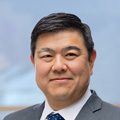
Contributors

Endnotes
1. All returns are stated in U.S. dollars, unless otherwise noted. All Fund performance and attribution statements are for the Dodge & Cox Worldwide Funds — Global Bond Fund’s USD Accumulating Class.
2. The use of specific examples does not imply that they are more or less attractive investments than the Fund’s other holdings. Unless otherwise specified, all weightings and characteristics are as of 31 December 2025.
3. The U.S. Government does not guarantee the Fund’s shares, yield, or net asset value. The agency guarantee (by, for example, Ginnie Mae, Fannie Mae, or Freddie Mac) does not eliminate market risk.
Disclosures
Statements in this presentation represent the opinions of the speakers expressed at the time the presentation was recorded, and may change based on market and other conditions without notice. The statements are not intended to forecast or guarantee future events or results for any product or service, or serve as investment advice.
This information should not be considered a solicitation or an offer to purchase shares of Dodge & Cox Worldwide Funds plc or a solicitation or an offer by Dodge & Cox Worldwide Investments Ltd. and its affiliates to provide any services in any jurisdiction. A summary of investor rights is available in English at dodgeandcox.com. Dodge & Cox Worldwide Funds plc are currently registered for distribution in Austria, Denmark, Finland, France, Germany, Ireland, Italy, Luxembourg, the Netherlands, Norway, Portugal, South Africa, Spain, Sweden, Switzerland, and the United Kingdom. The Funds may terminate the arrangements made for the marketing of any fund or share class in an EU Member State at any time by using the process contained in Article 93a of the UCITS Directive.
This is an advertising document. First Independent Fund Services AG, Klausstrasse 33, CH-8008 Zurich, is the representative in Switzerland and NPB Neue Privat Bank AG, Limmatquai 122, CH-8024 Zurich, is the paying agent in Switzerland. The sales prospectus, key investor information, copies of the articles of association and the annual and semi-annual reports of the fund can be obtained free of charge from the representative in Switzerland.
Marketing Communication. The views expressed herein represent the opinions of Dodge & Cox Worldwide Investments and its affiliates and are not intended as a forecast or guarantee of future results for any product or service. Please refer to the Funds’ prospectus and relevant key information document at dodgeandcox.com before investing for more information, including risks, charges, and expenses, or call +353 1 242 5411.
Returns represent past performance and do not guarantee future results. Investment return, costs, and share price will fluctuate with market conditions and may be affected by currency fluctuations. Investors may have a gain or loss when shares are sold. Fund performance changes over time and currently may be significantly lower than stated above. Visit the Fund’s website at dodgeandcox.com for current month-end performance figures.
BLOOMBERG® and the Bloomberg indices listed herein (the “Indices”) are service marks of Bloomberg Finance L.P. and its affiliates, including Bloomberg Index Services Limited (“BISL”), the administrator of the Indices (collectively, “Bloomberg”) and have been licensed for use for certain purposes by the distributor hereof (the “Licensee”). Bloomberg is not affiliated with Licensee, and Bloomberg does not approve, endorse, review, or recommend the financial products named herein (the “Products”). Bloomberg does not guarantee the timeliness, accuracy, or completeness of any data or information relating to the Products. Bloomberg Portfolio Risk and Analytics (PORT+) is a portfolio and risk analytics platform.
See dodgeandcox.com/disclosures for a full list of financial terms and Index definitions.